
Alnwick Castle
Alnwick Castle: The Real Hogwarts, a Viking Vampire and 700 Years of the Percy Family
When the producers of Harry Potter and the Philosopher’s Stone needed an outdoor setting for Hogwarts, they came to Alnwick. The broomstick-flying lessons filmed in the inner bailey here were seen by audiences in over 80 countries; broomstick training experiences for visitors have been a fixture ever since.
But the castle’s real story is older, stranger and considerably more dramatic than any fiction. The Percy family acquired Alnwick in 1309 and have held it, as Earls and then Dukes of Northumberland, for over 700 years. Three centuries before the Percys arrived, a 12th-century chronicler recorded here one of the most extraordinary tales in medieval English history — the story of the Alnwick Vampire.
The castle stands today as the second largest inhabited castle in England, its medieval walls largely intact, its state rooms among the finest in the north of England, and its connection to the Northumberland landscape as deep as any castle in the country.
Alnwick Castle is in the market town of Alnwick in Northumberland, roughly 35 miles south of the Scottish border and 308 miles north of London. The Alnwick Garden, one of the most celebrated contemporary gardens in Britain, lies immediately alongside it. This guide covers everything you need to plan a visit — the history, the state rooms, what to see and do, where to stay, and how to get there.
Where Is Alnwick Castle?
Alnwick Castle is in the centre of Alnwick, Northumberland, just off the A1 road. From the town centre it is a short walk of around 10 minutes to the castle gates. The nearest mainline railway station is Alnmouth, on the East Coast Main Line, about 5 miles away; buses and taxis connect Alnmouth to Alnwick in around 15 minutes.
Northumberland is one of the most sparsely populated and scenically dramatic counties in England, and the castle sits at the heart of a landscape that includes the Northumberland National Park, some of England’s finest beaches and a remarkable chain of coastal fortresses. Edinburgh is around two hours north by car; Newcastle is about 35 miles south.
A Brief History of Alnwick Castle
Alnwick’s recorded history as a castle begins around 1096, when Ivo de Vesci, Baron of Alnwick, built the first fortifications here in the years following the Norman Conquest. The strategic importance of the site was immediately clear — this was border country, disputed between England and Scotland for centuries, and the castle changed hands and weathered sieges repeatedly.
King David I of Scotland captured it in 1136; it was besieged by William the Lion of Scotland in 1172 and 1174. By the 13th century it had been substantially rebuilt in stone as a serious military fortification.
In 1309 Henry Percy acquired Alnwick, and the Percys set about turning a frontier fortress into one of the great noble houses of England. The family became Earls of Northumberland, and their influence ran through the major events of English medieval history — the Wars of the Roses saw the castle besieged in 1461 and 1462, changing hands multiple times between Lancastrian and Yorkist forces.
Thomas Percy, a later family member, became one of the conspirators in the Gunpowder Plot of 1605, placing the Alnwick name at the heart of one of the most dramatic events in English political history. In the 18th century the 1st Duke and Duchess of Northumberland commissioned architects including Robert Adam to remodel the interiors in the fashionable Strawberry Hill Gothic style.
A generation later, the 4th Duke hired Anthony Salvin to restore a more authentically medieval appearance, a project that cost £250,000 between 1854 and 1865 and produced the richly decorated Italian Renaissance state rooms that visitors see today.
The remarkable thing about Alnwick is its unbroken continuity. The Percy family has owned the castle since 1309 — over 700 years and more than 20 generations — and it remains their family seat today. No other great castle in the north of England has been in single-family ownership for so long, or so continuously inhabited.
Architecture & Design
Alnwick is a castle of formidable scale. The complex covers 217,800 square feet and contains around 150 rooms, making it the second largest inhabited castle in England after Windsor. Its exterior is robustly medieval — thick curtain walls, a single narrow entrance emphasising its defensive origins, and the great gatehouse and towers raised by the Percys in the 14th century. The Prudhoe Tower and the Constable’s Tower are among the most imposing elements of the skyline.
Inside, the picture changes dramatically. The state rooms remodelled by Salvin for the 4th Duke in the 19th century are decorated in a sumptuous Italian Renaissance style — painted ceilings, fine tapestries, gilded furniture and an important collection of paintings and porcelain that reflect centuries of Northumberland ducal taste.
The grand staircase, the library and the dining room are among the finest rooms of their kind outside London. The Great Kitchen, a Victorian-era space at the heart of the castle’s service wing, has also been opened to visitors as a new exhibition space exploring the history of the household below stairs.
Legends & Lore
Alnwick’s most extraordinary legend comes directly from a medieval chronicle. In the late 12th century, the English historian William of Newburgh recorded the tale of the Alnwick Vampire — a servant of the castle’s original lord who was said, after dying in suspicious circumstances, to have risen from his grave and spread pestilence through the town.
According to the chronicle, the townspeople exhumed the body and burned it to end the plague. The story is one of the earliest vampire accounts in European written record, and while it belongs firmly to the realm of medieval superstition, William of Newburgh’s Historia Rerum Anglicarum is a genuine historical text — the tale is as old as the castle itself.
The more recent ghost is the Grey Lady, said to haunt the dark passages beneath the castle — a figure in Victorian dress whose appearances in the tunnels have been reported by staff and visitors alike. These tales sit naturally in a castle of this age and history, told as legend rather than fact but woven deeply into Alnwick’s character.
On the screen, meanwhile, the castle’s credentials need no embellishment: the inner bailey served as the outdoor setting for Hogwarts in Harry Potter and the Philosopher’s Stone and Chamber of Secrets, and Alnwick has since appeared in Transformers: The Last Knight, Dungeons & Dragons: Honor Among Thieves, The Hollow Crown and The Black Adder, among others.
Visiting the Castle
A visit to Alnwick is a full day by any measure. The State Rooms are the historic centrepiece — a sequence of richly decorated rooms displaying the Percy family’s art collection, tapestries, fine furniture and porcelain, with guided tours available to put the collection and the history in context.
The Great Kitchen exhibition offers a different perspective: the working heart of the Victorian castle household, newly accessible to visitors. Beyond the formal rooms, the castle has an exceptional activity programme. Broomstick training in the inner bailey — on the exact spot where Harry Potter’s flying lessons were filmed — is one of the most popular experiences in the north of England, and the combination of genuine medieval castle and cinematic recognition gives it a charm that is hard to replicate anywhere else.
Archery sessions, the Dragon Quest adventure trail for younger visitors, medieval crafts and games in the Artisans Courtyard, and the Fusiliers Museum of Northumberland within the grounds all add depth to the day.
The castle runs a strong events programme throughout the season — falconry displays, medieval reenactments and seasonal celebrations — and arriving early, checking the day’s show timetable and booking tickets online in advance (which saves money and grants an annual pass for unlimited return visits) is the best way to get the most from a visit.
Cafés on the grounds serve fresh coffee, light lunches and snacks using local produce. Visitors may not need to bring their own food given the on-site options, though it is worth confirming the current picnic policy on the official website. There is a gift shop. Photography is generally permitted in the grounds; confirm with staff for any restrictions in the State Rooms.
Check Tickets & Tour Times for Alnwick Castle →
Check the official Alnwick Castle website for current opening times and prices before your visit.
Where to Stay Near Alnwick Castle
Alnwick Castle is a private family seat and does not offer visitor accommodation. The town of Alnwick itself is a pleasant and convenient base, with a good range of hotels, inns and guesthouses, and the wider Northumberland countryside — coast, moors, villages and the Northumberland National Park — offers some of the finest and most peaceful self-catering options in England.
Staying in or near Alnwick also allows time for the Alnwick Garden, the coast at Bamburgh and Seahouses, and the remarkable chain of Northumberland castles that stretches from Alnwick south to Warkworth and north to Bamburgh.
Find Hotels & Stays in Alnwick →
The Best Time to Visit
Spring (April to June) is a lovely time at Alnwick — the grounds and the adjacent Alnwick Garden are at their most colourful, the days are lengthening and visitor numbers are lower than in peak summer. Summer (July and August) brings the full events programme — medieval reenactments, falconry, the complete activity schedule — and the best weather for exploring the Northumberland coast, though the castle is at its busiest.
For the full experience with manageable crowds, a weekday in late May or early June is ideal.
Autumn (September and October) offers quieter weekdays, golden light on the castle stone and the Northumberland landscape at its most atmospheric. Winter sees reduced hours and a quieter programme, but the castle in winter — its medieval stone, the crows on the towers, the empty inner bailey — is genuinely striking.
How to Get There
By car. Alnwick is just off the A1, the main road north from London to Edinburgh. From London allow five to six hours; from Newcastle, around 35 minutes; from Edinburgh, around two hours. Parking is available in the town near the castle.
By train. The East Coast Main Line runs from London King’s Cross to Alnmouth in around three and a half hours; from there, buses (X15, X18 or X20) and taxis reach Alnwick town centre in about 15 minutes. From the town centre, the castle is a comfortable 10-minute walk.
On foot. From Alnwick town centre, the castle is easily walkable — the approach through the town gives a good sense of the castle’s relationship to the market town it has dominated for nine centuries.
Compare Transfers & Local Transport in Northumberland →
Nearby Attractions
Alnwick sits at the heart of one of the most historically rich stretches of English countryside — the Northumberland coast and its extraordinary chain of castles.
| Attraction | Why Visit | Distance |
|---|---|---|
| Alnwick Garden | A spectacular contemporary garden with a Poison Garden, grand cascade and bamboo labyrinth — one of the great modern gardens of Britain | Adjacent |
| Bamburgh Castle | One of England’s most dramatic coastal fortresses, on a basalt outcrop above the North Sea | ~15 miles |
| Dunstanburgh Castle | A haunting medieval ruin on a remote headland — one of the finest castle ruins in northern England | ~8 miles |
| Warkworth Castle | A magnificent Percy family ruin with a rare hermitage carved into the cliff above the River Coquet | ~7 miles |
| Seahouses & Farne Islands | The departure point for boat trips to the Farne Islands — puffins, grey seals and seabirds in extraordinary numbers | ~15 miles |
A natural Northumberland itinerary pairs Alnwick Castle with the Alnwick Garden, then takes the coastal road north to Bamburgh and Seahouses — one of the finest drives in northern England.
Browse Northumberland Tours & Coastal Trips →
Family & Accessibility
Families. Alnwick is outstanding for families — the Harry Potter connection and broomstick training are an immediate draw for children of any age, and the Dragon Quest trail, archery, the Artisans Courtyard and the castle’s scale and drama keep younger visitors entertained throughout the day. The castle’s combination of real history and film fame makes it one of the most naturally engaging castle visits in England.
Accessibility. The castle works hard to be welcoming, with a free carer ticket available for disabled visitors on proof of entitlement. However, the historic nature of the castle — cobbled surfaces, gravel paths, steps throughout — makes full accessibility challenging, and the State Rooms involve stairs.
Mobility scooters are permitted and a small number can be reserved in advance; check the official accessibility information before visiting. Pushchairs may find some areas difficult to navigate. Only assistance dogs are permitted within the castle itself.
Practical Tips
- Book online in advance — Alnwick’s online tickets are annual passes, giving unlimited return visits for 12 months from your first visit, so it is always worth booking ahead.
- Plan your day around the show times — broomstick training, falconry and medieval reenactments run to a timetable; check the board at the entrance and build your day around them.
- Wear comfortable walking shoes — the castle grounds involve cobbles, gravel and significant distances on foot.
- Pack a waterproof walking jacket; Northumberland weather is changeable and much of Alnwick’s best experience is outdoors.
- Check photography guidance in the State Rooms with staff on arrival.
- Bring a portable power bank for a long day of photos and the castle app.
- Visit the Alnwick Garden on the same day — it is immediately adjacent and a full attraction in its own right, particularly the Poison Garden.
- Overseas visitor? Pack a UK travel adapter for the Type G plugs used throughout the UK.
Conclusion
Alnwick Castle has been lived in by the Percy family for over 700 years, survived Scottish sieges, the Wars of the Roses and the Gunpowder Plot, generated one of the oldest vampire legends in European literature, and provided the outdoor courtyard where Harry Potter first learned to fly. It is the second largest inhabited castle in England, in one of the country’s most beautiful and under-visited counties, with the Northumberland coast and its extraordinary chain of other castles within easy reach.
Few days out in northern England pack in as much — history, drama, film, landscape and genuine medieval magnificence — as a day at Alnwick.
Frequently Asked Questions
What are the opening hours of Alnwick Castle?
The castle grounds are generally open daily from 10am, with seasonal variations in closing times. The State Rooms are accessible from mid-morning with a last entry time in the afternoon. Check the official Alnwick Castle website for the current seasonal hours before you travel.
How much does it cost to visit Alnwick Castle?
Online tickets are annual passes, giving unlimited return visits for 12 months from your first visit, and are cheaper than gate prices. Concession rates apply for older visitors and students; one carer per disabled visitor is admitted free. Check the official website for current prices.
What is the Harry Potter connection at Alnwick Castle?
The inner bailey at Alnwick was used as the outdoor location for Hogwarts in Harry Potter and the Philosopher’s Stone (2001) and Chamber of Secrets (2002), most famously for the broomstick-flying lessons. Broomstick training experiences are available for visitors in the same courtyard.
How long should I spend at Alnwick Castle?
Allow a full day — the State Rooms, Great Kitchen, broomstick training, archery, Dragon Quest trail, Artisans Courtyard and the various museums each take time, and fitting in the live shows requires planning around the daily timetable.
Can you stay overnight at Alnwick Castle?
The castle itself does not offer visitor accommodation, but the town of Alnwick has a good range of hotels and guesthouses, and the wider Northumberland countryside offers outstanding self-catering options.
Is Alnwick Castle suitable for children?
Absolutely — it is one of the best family castle visits in England. The Harry Potter connection, broomstick training, Dragon Quest trail, archery and the castle’s scale and drama make it outstanding for children of all ages.
Is Alnwick Castle wheelchair accessible?
The historic fabric of the castle — cobbles, gravel, stairs — limits full accessibility. Mobility scooters are permitted and a small number can be reserved in advance. One carer is admitted free. Check the official accessibility information before visiting.
Is there food at Alnwick Castle?
Yes — cafés on the grounds serve fresh coffee, light lunches and snacks using local produce. Check the current policy on the official website for bringing your own food.
Are dogs allowed at Alnwick Castle?
Only assistance dogs are permitted within the castle itself. Check the current policy for the grounds before bringing a dog.
What is the Alnwick Vampire?
A 12th-century chronicle by the historian William of Newburgh records a tale of a castle servant who was said to have risen from the grave and spread plague through the town. The story is one of the earliest vampire accounts in European written history — genuine medieval folklore recorded in a genuine medieval text.
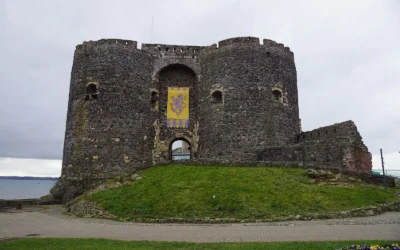
Carrickfergus Castle
Carrickfergus Castle: Ireland's Greatest Norman Fortress, Above Belfast Lough In 1315, Robert the Bruce's brother Edward invaded Ireland with an army and besieged Carrickfergus Castle. The siege went on so long, and provisions ran so completely dry, that the...
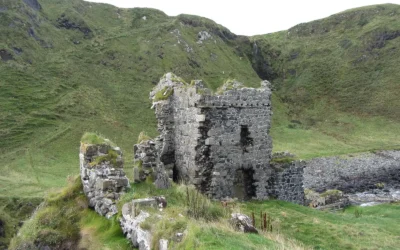
Kinbane Castle
Kinbane Castle: The White Head Castle at the End of 140 Steps, Above the Atlantic Kinbane means "white head" in Irish — Caisleán Ceinn Bán — and the name is immediately clear to anyone who looks at the limestone headland on which the castle stands: the cliff...
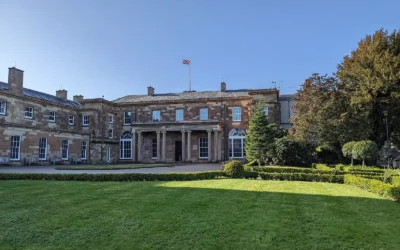
Hillsborough Castle
Hillsborough Castle: Where Northern Ireland's Peace Was Made, Twenty Minutes from Belfast In 1771, Wills Hill — the first Marquess of Downshire, one of the most powerful men in British colonial politics — received Benjamin Franklin at Hillsborough Castle. The...
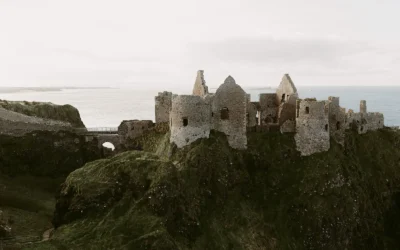
Dunluce Castle
Dunluce Castle: The Clifftop Ruin Where Game of Thrones Met Narnia, Above the Antrim Coast In 1588, a Spanish Armada ship called the Girona wrecked on the rocks near Dunluce Castle. The MacDonnell clan — who had controlled the castle since the 1550s — salvaged the...
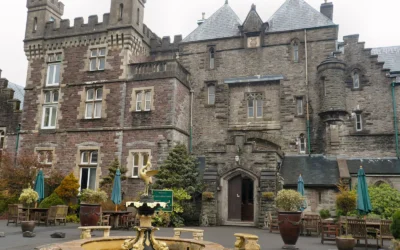
Craig y Nos Castle
Craig y Nos Castle: The Victorian Opera Star Who Built Her Own Theatre in the Brecon Beacons Adelina Patti was the most celebrated opera singer of the Victorian era — a soprano who commanded the largest fees in the world and whose voice filled La Scala in Milan,...