
Steall Falls
Steall Falls: Scotland’s Second-Highest Waterfall
You walk into the Nevis Gorge through dark, dripping woodland, the Water of Nevis crashing somewhere below your feet and steep crags pressing in on either side. Then, quite suddenly, the gorge opens — and there, across a wide, flat meadow ringed by mountains, a white ribbon of water comes pouring 120 metres down the far hillside. This is Steall Falls, or An Steall Bàn, Scotland’s second-highest waterfall and one of the most cinematic sights in the Highlands.
It sits in Glen Nevis, in the shadow of Ben Nevis, a short drive from Fort William. The walk in is part of the magic, and so is the famous wire bridge strung across the river at the meadow’s edge. Little wonder it has appeared in the Harry Potter films and in Braveheart.
Here’s everything you need to plan the trip.
About Steall Falls
An Steall Bàn means “The White Spout” in Gaelic, and there’s no better description of the single, unbroken 120-metre (390-foot) plume that gives the falls their fame. It’s widely reckoned to be Scotland’s second-highest waterfall, behind only Eas a’ Chual Aluinn far north in Sutherland.
The water spills from the high hanging valley of Coire a’ Mhail, on the slopes of the Mamores, dropping into the flat green basin known as Steall Meadows. Through that meadow runs the Water of Nevis — the river that, over thousands of years, carved the dramatic Nevis Gorge you walk through to get here. It’s this river, not the falls, that the celebrated wire bridge crosses.
The whole area belongs to the John Muir Trust, which looks after it for its wild, untouched character, and it’s hemmed in by some of Scotland’s finest mountains — Ben Nevis to the north and the Mamores to the south. That combination of soaring scale and hidden-valley drama is exactly why film-makers keep coming back.
Getting there
By car is the usual way. From Fort William, follow the single-track Glen Nevis road for around seven miles to the car park at the very end of the public road. Allow a little longer than the distance suggests: the road is narrow with passing places, often busy, and the last stretch winds beside the gorge. You’ll pass the Glen Nevis Visitor Centre and the roadside Lower Falls on the way up, and the views alone are worth the drive.
Public transport is limited. A seasonal bus service run by Shiel Buses heads up Glen Nevis in the summer months, but it doesn’t reach the road end, so you’ll have a walk from wherever it drops you — check the current timetable before you rely on it.
On foot or by bike, the glen road can be cycled by the fit (it’s narrow and undulating), while walking the whole way from Fort William is a long outing in itself. Most visitors drive to the road end and start the gorge path from there.
If you’re coming from further afield, public transport up the glen is limited, so visitors arriving without a car often prefer to let a local driver take the strain.
Compare Transfers & Local Transport around Fort William →
Where does the name come from?
The name is plain Gaelic poetry. Steall means a spout or jet of water, and bàn means white or fair — so An Steall Bàn is simply “the white spout,” a name earned the moment you see that pale plume against the dark hillside.
Unlike some Highland falls, Steall carries no famous dragon or water-spirit legend; its romance comes instead from the Gaelic landscape around it and from its modern fame on the big screen. The glen’s place names tell their own story, though — gleann a valley, beinn a mountain, coire a corrie — a whole language written across the hills.
The walk and the trails
The path to the falls — the Steall Falls Path — runs about 2.5 kilometres (1.5 miles) each way from the road-end car park, roughly three miles there and back, and most people take an hour and a half to two hours.
It begins in woodland of birch, oak, hazel and Scots pine, then threads along the side of the Nevis Gorge with the Water of Nevis thundering below and steep drops to one side. The surface changes constantly — gravel, bare rock, little wooden walkways and a few sections where you simply clamber over boulders — so it’s rockier and more demanding than the modest distance suggests.
Then the gorge opens into Steall Meadows and the falls reveal themselves across the valley. The meadow is the classic viewpoint, and a fine spot for a picnic. To reach the very base of the falls you must cross the Water of Nevis on the wire bridge — three steel cables, one for your feet and one for each hand. It’s an exhilarating wobble for the sure-footed, entirely optional, and best avoided in high wind or heavy rain. Beyond the meadow lie a ruined cottage and the steep paths up to the Ring of Steall, a tough four-Munro ridge for experienced hillwalkers only.
Parking
The car park at the end of the Glen Nevis road is free, but it’s small and works on a first-come basis — on fine days it fills completely by mid-morning, so arriving early is the safest plan. The single-track road in has potholes and few passing places, so take particular care in a campervan or larger vehicle.
If the road-end car park is full, the Lower Falls car park further down the glen is the usual fallback; note that this one charges, so check the signage for current details. Wherever you park, avoid leaving your car on the verge in a way that blocks the lane.
Facilities
This is genuine wilderness, so be clear about one thing before you set off: there are no toilets, cafés or shops at the trailhead or anywhere along the Steall path. You need to arrive fully self-sufficient, with everything you’ll want for the walk.
The nearest facilities are back down the glen and in town. The Glen Nevis Visitor Centre, lower down the road, has toilets and information, and Fort William — a short drive away — has cafés, shops and restaurants for before or after your walk.
Things to know before you go
Best time to visit. Late spring to early autumn offers the fullest flow and the kindest weather, autumn brings golden colour, and winter turns the glen into a snowy spectacle — but only for those properly equipped for serious mountain conditions.
Midges. Glen Nevis is famous for them. On still, damp summer days the midges can be relentless, so pack repellent and a head net — you’ll be very glad of both.
Dogs. Dogs are welcome but should be kept on a lead near the gorge, the steep drops and the wire bridge.
Accessibility. The path is not suitable for wheelchairs or pushchairs: it’s rocky and uneven, with gully crossings, boulder steps and sheer drops into the gorge.
Families and safety. Sure-footed children manage it well, but the exposure is real — unfenced drops into the gorge, slippery rock, a cold and fast river, and that wire bridge (which no one needs to cross). Keep children close throughout, and don’t feel any pressure to tackle the crossing.
Swimming. The pool at the foot of the falls is cold, fast and reached only by the wire bridge or by wading, so it isn’t a safe place to swim. Some visitors do paddle in the calmer pools at the Lower Falls down the glen in summer, but always treat Highland rivers with caution — the water is cold and currents can be strong.
Where to stay
Most visitors base themselves in or around Fort William, but you can also stay right on the doorstep of the glen.
Fort William, around seven miles away, has by far the widest range of hotels, inns and guesthouses, plus shops, restaurants and transport links — the obvious choice for a comfortable base.
To wake up closer to the trail, look at staying in Glen Nevis itself, where a campsite, a hostel and a scattering of guesthouses and self-catering cottages put you just minutes from the start of the walk.
Find Hotels & Stays in Fort William →
What to pack
The Highland weather and terrain demand proper kit, so come ready.
- A pair of waterproof walking boots with good grip for the rocky, slippery gorge path.
- A waterproof jacket and warm layers — Highland weather changes in minutes.
- A midge head net and repellent, essential on still summer days.
- A travel tripod for long-exposure shots of the falls.
Walking poles, an OS Explorer 392 map or GPS, plenty of water and snacks, a small first-aid kit and a bag to carry your litter home all earn their place in the pack too.
Nearby attractions and making a day of it
Glen Nevis is a brilliant base for the western Highlands, with Britain’s highest mountain and a famous film railway close at hand.
| Attraction | Why Visit | Distance |
|---|---|---|
| Ben Nevis | Britain’s highest mountain, whose Mountain Path starts from the glen — a serious full-day climb for the well-prepared | From the glen |
| Nevis Range | A mountain gondola up Aonach Mòr with superb mountain biking and far-reaching views | ~7 miles north |
| Old Inverlochy Castle | An atmospheric 13th-century ruin near Fort William, once a feudal stronghold of the Lords of Lochaber | ~15 minutes |
| Glenfinnan Viaduct & Jacobite Steam Train | The “Hogwarts Express” route crosses this magnificent viaduct — irresistible for Harry Potter fans | ~17 miles |
| Lower Falls | An easy roadside waterfall stop further down the Glen Nevis road, with calmer summer pools | Roadside, down the glen |
For a full day, walk the gorge to Steall Meadows, stop at the roadside Lower Falls on the way out, and time your visit around the Jacobite Steam Train crossing the Glenfinnan Viaduct. Fort William’s own West Highland Museum is worth a look too, and serious walkers can take on the famous Ring of Steall.
Browse Fort William & Highland Tours →
Photography tips
Steall is a photographer’s dream. The wide meadow gives you the signature shot — the full 120-metre plume framed by mountains — while crossing (or carefully wading) to the base lets you capture the mist and power up close. Including a figure on the wire bridge adds a wonderful sense of scale.
Soft early-morning or late-afternoon light is kindest, and a visit after rain brings the falls to their fullest. Bring a tripod and a polarising filter for silky long exposures, and don’t rush through the gorge — the dozens of smaller cascades along the path are beautiful in their own right.
Conclusion
Steall Falls is wild Scotland distilled into a single short walk: a brooding gorge, a hidden meadow, a 120-metre spout of white water and a wire bridge to test your nerve. It asks only a couple of hours and a sturdy pair of boots — and a head net in summer — and rewards you with a scene that has enchanted film-makers and hikers alike. Time it for after the rain, and Glen Nevis will show you exactly why.
FAQs
How tall is Steall Falls?
Steall Falls has a single drop of around 120 metres (390 feet), making it widely regarded as Scotland’s second-highest waterfall, behind Eas a’ Chual Aluinn in Sutherland.
Is there a fee to visit Steall Falls?
No — the falls are free to visit. The road-end car park is free (though small and quick to fill), while the Lower Falls car park down the glen is a paid alternative; check the signage for details. The John Muir Trust, which cares for the area, welcomes donations.
What is the best time to visit Steall Falls?
Late spring to early autumn for the fullest flow and best weather, autumn for colour, and winter only with proper mountain gear. Be ready for midges on still summer days.
Are dogs allowed at Steall Falls?
Yes, but keep dogs on a lead near the gorge, the steep drops and the wire bridge.
Is Steall Falls wheelchair or pushchair accessible?
No. The gorge path is rocky and uneven, with boulder steps, gully crossings and sheer drops, so it isn’t suitable for wheelchairs or pushchairs.
What are the parking options at Steall Falls?
A small, free car park sits at the end of the Glen Nevis road but fills early on fine days. If it’s full, the paid Lower Falls car park further down the glen is the usual fallback.
Can I swim at Steall Falls?
The pool at the base is cold and fast and can only be reached via the wire bridge or by wading, so it isn’t a safe place to swim. Some people paddle in the calmer Lower Falls pools in summer, but always take care with cold water and currents.
What should I wear when visiting Steall Falls?
Sturdy waterproof boots with good grip, a waterproof jacket and warm layers, and — in summer — midge repellent and a head net.
Are there toilets or cafés at Steall Falls?
No. There are no facilities at the trailhead or on the path. Use the Glen Nevis Visitor Centre lower down the glen, or stock up in Fort William, before you set off.
Do I have to cross the wire bridge?
No. The main viewpoint is from the meadow, with no crossing required. The wire bridge — three cables, one underfoot and one for each hand — is entirely optional and best left to the sure-footed, and avoided in wind or wet.
What’s nearby?
Ben Nevis, the Nevis Range gondola, Old Inverlochy Castle, Fort William and its West Highland Museum, the Glenfinnan Viaduct and Jacobite Steam Train, and the roadside Lower Falls.
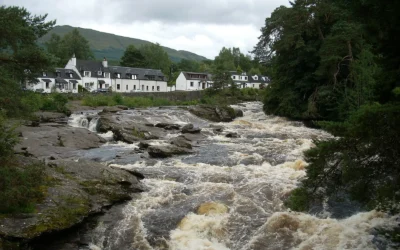
Falls of Dochart
Falls of Dochart: The Waterfall at the Heart of a Village Most waterfalls require a walk to find. The Falls of Dochart require no such effort at all — they run directly through the centre of Killin, beneath the old stone Bridge of Dochart, in full view of the...
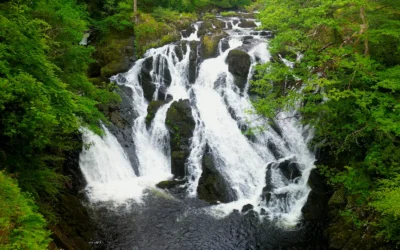
Swallow Falls
Swallow Falls: Wales' Highest Continuous Waterfall The River Llugwy has been performing for visitors at Swallow Falls for well over a century, and it still knows exactly what it is doing. The water tumbles 42 metres through a narrow, tree-lined gorge in a sequence of...
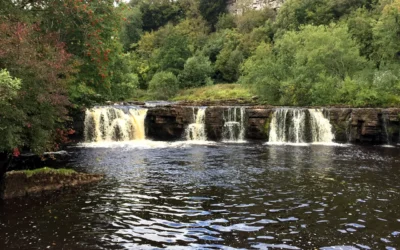
Wain Wath Force
Wain Wath Force: The Broadest Waterfall in Upper Swaledale Wain Wath Force will never win a prize for height. The River Swale drops only around a metre and a half here, sliding gently over a wide limestone ledge beneath the pale cliffs of Cotterby Scar. But what it...
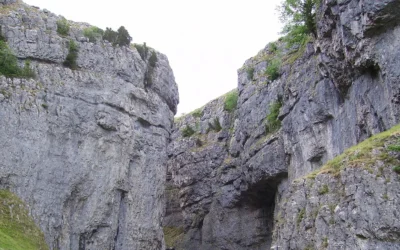
Gordale Scar
Gordale Scar: The Gorge That Stopped Wordsworth in His Tracks There is a moment as you walk the flat, pleasant path from Malham when the gorge closes around you without warning. The sky narrows to a strip above. The walls rear up on either side — overhanging...
Low Force
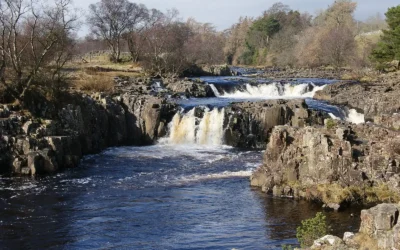
Low Force: Teesdale's Most Peaceful Waterfall High Force gets the crowds. Low Force gets the quiet. Just a mile and a half downstream from its more famous neighbour, where the River Tees spreads wide across a series of 18-foot cascades over the Whin Sill...