
Southwold Lighthouse
Southwold Lighthouse: The Beacon at the Heart of a Suffolk Town
Most lighthouses stand alone — on a cliff, a headland, a remote point of land where the sea has the upper hand. Southwold Lighthouse stands in the middle of a town. Walk along any of the streets radiating from the lighthouse and you will find yourself looking up at the white brick tower rising above the rooftops, perfectly placed in the centre of one of Suffolk’s most loved seaside towns. It is a landmark that belongs to the town as much as to the sea — equally visible from the beach and from the high street — and it gives Southwold a character no other Suffolk town can quite claim.
First lit in 1890, the lighthouse was built to replace three earlier lighthouses at Orfordness, all threatened by the coastal erosion that has reshaped this stretch of the Suffolk coast for centuries. James Douglass, the same Trinity House engineer who built Souter Lighthouse in Tyne and Wear, supervised its construction from 1887. The lighthouse is still active, its beam reaching 24 nautical miles across the North Sea, and guided tours organised through the summer months allow visitors to climb its 113 steps to the lantern room for panoramic views of the Suffolk Heritage Coast, the North Sea and Dunwich Forest. This guide covers everything you need to know about visiting Southwold Lighthouse.
Where Is Southwold Lighthouse?
Southwold Lighthouse stands in the centre of Southwold, Suffolk — quite literally among the rows of houses and within walking distance of the beach, the pier, the harbour and the town’s independent shops and cafés. The town is approximately 15 miles north of Lowestoft and 20 miles south of Great Yarmouth, on the Suffolk Heritage Coast. The lighthouse is reached via the A1095 from Blythburgh or Wrentham.
Southwold has its own regular bus connections from the surrounding area. Parking is available in the town; the lighthouse is easily walkable from any point within Southwold.
A Brief History of Southwold Lighthouse
Southwold Lighthouse’s construction was prompted by one of the most persistent problems on the Suffolk coast: coastal erosion. The three lighthouses at Orfordness that had guided shipping along this stretch of the North Sea were threatened by the sea advancing on their positions, and Trinity House determined to build a replacement inland, at a safe distance from the eroding shoreline, in the centre of Southwold itself.
Construction began in 1887 under the supervision of James Douglass, Engineer in Chief to Trinity House. The lighthouse was first lit on 3 September 1890 — and survived a fire in its original oil-fired lamp just six days later, a rather dramatic start for a structure designed to last centuries. The lamp system evolved through successive upgrades: a Matthews incandescent oil burner, then a petroleum vapour burner, electrification in 1938 and automation in 1987, when the last keeper departed. The lighthouse is maintained by Trinity House and remains an active aid to navigation.
The remarkable thing about Southwold’s position is its literary echo. George Orwell — whose real name was Eric Blair — knew Southwold well, spending extended periods here during the 1930s while his father lived in the town. He worked on his writing at Southwold, and some of the bleak East Anglian landscape and the exposed North Sea coast found their way into his imagination and his work. The lighthouse would have been a constant presence in those years, rising above the town as it rises above it still.
Architecture & The Light
Southwold Lighthouse is a round brick tower, painted white, standing 31 metres (102 feet) tall. The design is classic Victorian lighthouse architecture — functional, elegant and built to last, with a circular lantern room at the top housing the light. The tower is a striking focal point of the town’s skyline, visible from virtually everywhere in Southwold.
The original Argand burner was succeeded through several generations of lamp technology before electrification in 1938. The current light operates a 180-watt navigation lamp with a range of 24 nautical miles, flashing to guide shipping along this busy stretch of the North Sea coast. The lighthouse remains an active navigational aid maintained by Trinity House.
Visiting the Lighthouse
Guided tours of Southwold Lighthouse are available during the summer months, organised by the local company Adnams PLC under licence from Trinity House. The tours allow visitors to climb all 113 steps to the lantern room at the top, where the reward is a sweeping panorama of the North Sea, Southwold’s rooftops and the Suffolk Heritage Coast, with Dunwich Forest visible in the distance on clear days.
Children are welcome on the tour but must be at least 1.1 metres tall and able to climb the stairs unaided. Advance booking is required and an admission fee applies. As exact times, prices and availability change seasonally, contact the tour organiser directly for current information before planning your visit.
Check Tickets & Tour Times for Southwold Lighthouse →
Staying Near the Lighthouse
Southwold Lighthouse does not have its own former keepers’ cottages available for holiday rental — the lighthouse stands in the centre of town, and the accommodation that has historically been associated with it consists of privately owned cottages in the surrounding streets that enjoy views of the tower. Two particularly well-regarded options are:
|
Accommodation |
Sleeps |
Features |
|
Lighthouse View |
4 |
Victorian cottage, sash windows, fireplaces, rear courtyard with lighthouse over the wall, near beach |
|
Lighthouse Loft |
4 |
Modern top-floor apartment in Caithness House, open-plan living, near town centre and beach |
Both sleep up to four guests and offer the lighthouse as a backdrop and the town, beach and pier within easy walking distance. As these are privately managed, book through their respective letting agents — details change, so check current availability online.
More broadly, Southwold has an excellent range of holiday accommodation — cottages, apartments and a small number of hotels, many with sea views — and is well worth spending two to three nights in to do justice to the town and the Suffolk Heritage Coast.
Find Coastal Stays Near Southwold Lighthouse →
The Best Time to Visit
Spring (April to June) is a wonderful time in Southwold — the town is lively without the peak summer crowds, the Suffolk Heritage Coast walking is at its finest, and the lighthouse tours are beginning their season. Summer (July to August) is Southwold’s busiest season; the beach huts are out, the pier is in full swing and the lighthouse tours are readily available — book accommodation and tours well ahead.
Autumn (September to October) brings softer light, quieter streets and some of the finest coastal walking weather of the year. Winter (November to March) sees fewer visitors and a quieter, more intimate town, though the lighthouse tours do not run in winter.
For the calmest lighthouse experience, a weekday morning visit outside the peak holiday weeks is ideal. Sunrise over the North Sea from the top of the tower is one of the finest views in Suffolk.
How to Get There
By car. Follow the A1095 from Blythburgh or Wrentham into Southwold. Parking is available in the town; from any car park the lighthouse is a short walk.
By public transport. Regular bus services connect Southwold with Halesworth (which has a railway station on the East Suffolk Line from Ipswich), and with surrounding towns. The bus journey from Halesworth takes around twenty minutes.
On foot. Southwold is a compact and walkable town; the lighthouse is within a few minutes’ walk of any point in the centre, the beach or the pier.
Compare Transfers & Local Transport in Suffolk →
Wildlife & The Coast
The Suffolk Heritage Coast around Southwold is excellent for wildlife. Seabirds are visible from the pier and the beach throughout the year, and seals and occasionally dolphins are spotted offshore, particularly in the calmer months. The RSPB reserve at Minsmere, around ten miles south of Southwold, is one of the finest nature reserves in England — a marsh and heathland reserve of exceptional richness, home to avocets, bitterns, marsh harriers and a remarkable range of wading birds.
A pair of binoculars for wildlife watching is well worth bringing — from the top of the lighthouse on a clear day the panorama includes the coastline of the Suffolk Heritage Coast stretching away in both directions, ideal for spotting seabirds and, with luck, dolphins or seals on the water.
Nearby Attractions
Southwold is a town of genuine character, with much to discover beyond the lighthouse.
|
Attraction |
Why Visit |
Distance |
|
Southwold Pier |
Traditional pier with amusements, theatre and sea views — a classic seaside experience |
Short walk |
|
Southwold Beach |
Golden sands and the famous colourful beach huts |
Short walk |
|
Southwold Harbour |
Picturesque fishing harbour — fresh local seafood |
~10-min walk |
|
Southwold Museum |
Maritime and local history of this distinctive Suffolk town |
Short walk |
|
RSPB Minsmere |
One of England’s finest nature reserves — bitterns, avocets, marsh harriers |
~10-min drive |
A natural day out: climb the lighthouse tower in the morning for the panoramic view, walk the beach and pier, lunch on fresh local seafood at the harbour, then RSPB Minsmere in the afternoon.
Browse Suffolk Coast Tours & Wildlife Experiences →
Safety & Accessibility
Safety. The 113-step climb to the lantern room is steep and narrow, suitable only for those who are physically confident with stairs. Children must be at least 1.1 metres tall and able to climb unaided. Those with mobility difficulties or fear of heights should check accessibility details with the tour organiser before booking.
Accessibility. The lighthouse itself is accessed through a guided tour; the surrounding town and the exterior of the tower are freely accessible. The nearby cottages and Southwold generally are accessible by road, with car parking in the town.
Families. Southwold is an excellent family destination — the beach, the pier, the harbour and the town are all very welcoming for families. The lighthouse tour has the height requirement (1.1 metres), so check whether young children meet this before booking.
Practical Tips
- Book the tour in advance — tower tours run seasonally (summer months) and must be booked ahead through the organiser.
- Arrive early for the view — on a clear morning, the 360-degree panorama from the lantern room is exceptional. Sunrise in particular is magical from this height above the North Sea.
- Wear comfortable walking shoes — 113 stairs are easier in flat, stable shoes.
- Pack a compact travel umbrella; the Suffolk coast is exposed and the weather changes fast.
- Overseas visitor? The UK uses Type G plugs, so a UK travel adapter is essential for charging your devices.
- Fresh seafood at Southwold Harbour — crab, fish and chips, and locally caught produce — is one of the pleasures of the town.
- Don’t miss RSPB Minsmere if you have an interest in wildlife — it is one of the finest nature reserves in England.
Conclusion
Southwold Lighthouse is a beacon that belongs equally to the sea and to the town it stands in — which is what makes it so completely unlike any other lighthouse on this coast. To climb its 113 steps for that view of the North Sea, the harbour, the beach huts and the rooftops of one of Suffolk’s finest seaside towns is to understand why this lighthouse was put here, and why it is loved as much by the people of Southwold as by the ships at sea. The Suffolk Heritage Coast is at its most distinctive at this point of it, and the lighthouse, rising above the rooftops at its heart, is the best possible place from which to understand why.
Frequently Asked Questions
What is the history of Southwold Lighthouse?
Southwold Lighthouse was built from 1887 under Trinity House engineer James Douglass and first lit on 3 September 1890, replacing three earlier lighthouses at Orfordness threatened by coastal erosion. It survived a fire in its lamp just six days after commissioning and has guided North Sea shipping ever since.
Where is Southwold Lighthouse located?
In the centre of Southwold, Suffolk, surrounded by the town’s streets and within easy walking distance of the beach, pier and harbour.
Can I climb Southwold Lighthouse?
Yes — guided tours, organised by Adnams PLC under Trinity House licence, run during the summer months and allow visitors to climb all 113 steps to the lantern room. Book in advance; an admission fee applies.
What are the opening hours for Southwold Lighthouse tours?
Tours are typically available during the summer months. Contact the tour organiser directly for current schedules and booking.
Can I stay overnight at Southwold Lighthouse?
The lighthouse itself does not offer accommodation. Nearby cottages including Lighthouse View and Lighthouse Loft offer holiday lets with lighthouse views in the surrounding streets.
Is Southwold Lighthouse suitable for families?
Yes — Southwold is an excellent family destination. For the tower tour, children must be at least 1.1 metres tall and able to climb 113 stairs unaided.
What wildlife can I see near Southwold Lighthouse?
Seabirds and, offshore, seals and occasionally dolphins. The RSPB reserve at Minsmere (about ten miles south) is one of England’s finest nature reserves for birds.
What makes Southwold Lighthouse unique?
Its extraordinary position in the heart of a Suffolk seaside town, surrounded by houses rather than on a remote headland, combined with its active status and the panoramic North Sea views from its tower.
What is the George Orwell connection with Southwold?
George Orwell (Eric Blair) spent extended periods in Southwold during the 1930s while his father lived there, working on his writing. The town’s landscape and the North Sea coast are thought to have influenced his imagination during this period.
How do I book a tour of Southwold Lighthouse?
Tours must be booked in advance through the tour organiser. Check current availability and pricing before your visit.
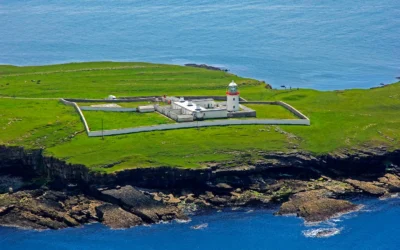
St John’s Point Lighthouse
St John's Point Lighthouse: The Yellow-Banded Giant of County Down In Van Morrison's song "Coney Island," the lighthouse at St John's Point is mentioned in a list of the things that make the Irish coast of County Down feel like home — somewhere between the Mourne...
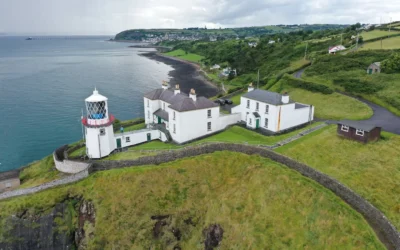
Blackhead Lighthouse
Blackhead Lighthouse: The Titanic Passed Here, and You Can Stay the Night In April 1912, RMS Titanic — built at Harland and Wolff's yards on Queen's Island in Belfast, launched in 1911 and fitted out over the following months — left Belfast Lough for the last time on...
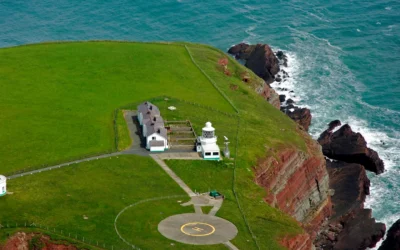
St Ann’s Head Lighthouse
St Ann's Head Lighthouse: The Last Shore-Based Light in Pembrokeshire, on the Tudor Coast In August 1485, a small fleet carrying Henry Tudor — exiled pretender to the English throne — rounded this headland and landed at Mill Bay, a sheltered cove just to the north of...
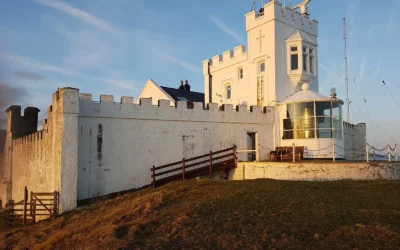
Point Lynas Lighthouse
Point Lynas Lighthouse: A Castle on the Cliffs of North Wales, Guiding Liverpool's Ships Since 1766 Most lighthouses are towers. Point Lynas is not. The lighthouse that stands on the rocky headland at the north-east corner of Anglesey is a low, castellated structure...
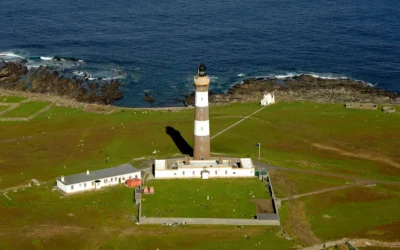
North Ronaldsay Lighthouse
North Ronaldsay Lighthouse: The UK's Tallest, Above the Island of the Seaweed Sheep Around the shoreline of North Ronaldsay — the northernmost and most isolated of the Orkney Islands — runs a drystone wall several miles long called the Sheep Dyke. Its purpose is...