
St Catherine’s Lighthouse
St Catherine’s Lighthouse: 700 Years of Light on the Isle of Wight
At the southernmost tip of the Isle of Wight, where the chalk and sandstone cliffs face the open English Channel, there has been a guiding light for the best part of seven hundred years. The story begins in 1323 — not with the elegant white tower that stands at the shore today, but with a stone beacon built high on the down above, in penance for a crime. That medieval lighthouse, nicknamed the “Pepperpot,” still stands on St Catherine’s Down, one of only a handful of medieval lighthouses to survive anywhere in England. Few places in Britain can trace their maritime light back so far.
The lighthouse working today is a striking 40-metre octagonal stone tower, built by Trinity House in 1838 after a terrible shipwreck, and still guiding vessels through the Channel and into the Solent. It is one of the rare octagonal lighthouses in the country, and visitors can climb its 94 steps on a guided tour or — better still — stay the night in one of the three former keepers’ cottages in its grounds. This guide covers everything you need to know about visiting and staying at St Catherine’s.
Where Is St Catherine’s Lighthouse?
St Catherine’s Lighthouse stands at St Catherine’s Point, the southernmost tip of the Isle of Wight, just outside the small hamlet of Niton and approximately 5 miles from the seaside town of Ventnor. The island lies off England’s south coast, reached by ferry from the mainland.
The lighthouse is reached via the A3055, the coast road that links Freshwater Bay, Ventnor and Shanklin. The setting is one of dramatic cliffs, rugged coastline and peaceful rural countryside, with the medieval Pepperpot visible on the down behind and the village of Niton offering a glimpse of island life. The Isle of Wight Coast Path runs through the area.
A Brief History of St Catherine’s Lighthouse
The lighthouse’s origins lie in a medieval act of penance. In 1323, a local landowner named Walter de Godeton was caught having taken cargo from a wrecked ship in nearby Chale Bay — a serious offence, as the cargo belonged to a religious house. As penance, he was ordered to build and maintain a light on St Catherine’s Down to warn ships off this dangerous coast. The resulting stone tower, the “Pepperpot,” still stands today, one of England’s very few surviving medieval lighthouses.
By the 18th century a replacement was needed, and an attempt was begun in 1785 — but it was abandoned, defeated by the same problem that has always plagued this coast: the light, set high on the down, was too often lost in fog and cloud. The unfinished tower, the “Salt Pot,” still stands beside the Pepperpot. It was only after the wreck of the sailing ship Clarendon in 1836, with great loss of life, that Trinity House finally built the present lighthouse — this time down near the shore, where its light would sit beneath the mist.
The remarkable thing about St Catherine’s is that even the new tower had to be cut down to size. Completed in 1838, the lighthouse was originally much taller — but mist still shrouded its lantern too often. So in 1875 the tower was lowered by some 43 feet, with sections removed from the upper and middle of the structure, to bring the light down beneath the troublesome cloud. Seven centuries on, the sea mist of St Catherine’s Point is still shaping how the coast is lit.
Architecture & The Light
St Catherine’s is a 40-metre (130-foot) octagonal stone tower, painted white, with a lantern room and gallery at the top — and the octagonal form is itself a rarity, as most British lighthouses are round. The eight-sided design and the pale stone give it a distinctive, almost castellated elegance against the cliffs. Inside, 94 steps spiral up to the lantern room, from which, on a clear day, the views stretch all the way to the Needles at the island’s western tip.
The light was originally oil-fuelled, projected through a large fixed dioptric lens made by Cookson and Co. In 1904 a fixed red subsidiary light was added, visible for around 17 miles, to mark the dangerous Atherfield Ledge offshore. The most dramatic change came in 1875, when the whole tower was lowered by 43 feet to bring its light beneath the persistent sea mist — a striking solution to the problem that had defeated every earlier attempt to light this point. Today the lighthouse is automated, still managed by Trinity House and still an active aid guiding ships through the Channel and into the Solent.
Visiting the Lighthouse
St Catherine’s opens to visitors through 40-minute guided tours, run by a licensed Trinity House guide. The tour tells the lighthouse’s long history and includes the climb of 94 steps to the lantern room, where the reward is a spectacular panorama of the coast — on a clear day, all the way to the Needles. There is also a small visitor centre with historical displays on the lighthouse and its place in the island’s maritime past.
The 94 steps are steep and narrow, so the climb is not suitable for those with mobility difficulties or very young children. Tours generally run during daylight hours; arriving about ten minutes early is recommended.
An admission fee applies for the guided tour. As opening times and prices vary, check with the tour operator or the official Trinity House information for current details before you travel.
Check Tickets & Tour Times for St Catherine’s Lighthouse →
Staying at the Lighthouse
The real magic of St Catherine’s is the chance to stay in its grounds. Three former lighthouse keepers’ cottages — Gurnard, Landward and Penda — are available as self-catering holiday accommodation, set right beside the working tower at the southern tip of the island. To wake here, with the lighthouse beside you and the Channel stretching to the horizon, is a genuinely special experience, combining the romance of a working lighthouse with the comforts of a well-appointed holiday home.
Each cottage sleeps two to three guests and has its own private enclosed courtyard, parking and access to a shared lawn, with views of the lighthouse and the sea:
|
Cottage |
Sleeps |
Features |
|
Gurnard |
2–3 |
Private courtyard, parking, sea views |
|
Landward |
2–3 |
Private courtyard, parking, close to the lighthouse |
|
Penda |
2–3 |
Private courtyard, parking, coastal setting |
With only three cottages in such a sought-after spot, they book up well in advance — reserving early is strongly advisable, especially for summer and school holidays.
Find Lighthouse & Coastal Stays Near Ventnor →
The Best Time to Visit
Spring (March to May) brings mild island weather, clifftop wildflowers and the clear light that makes the views from the tower so rewarding, all before the summer holiday crowds arrive. Summer (June to August) offers the warmest weather, the longest days and the best chance of calm seas for spotting dolphins offshore — but it is the busiest time and the cottages book up earliest.
Autumn (September to November) is quieter, with soft light and dramatic Channel skies, a fine time for walking the coast path. Winter (December to February) is wild and atmospheric on this exposed southern point, with fewer visitors, though tours and some facilities may be reduced.
For the calmest visit, weekday mornings are best. This is an exposed coastal site where the weather — and especially the famous sea mist — can change fast, so check the forecast and dress for the wind.
How to Get There
By car. The most practical option once on the island. Follow the A3055 coast road to Niton, from where the lighthouse is signposted near St Catherine’s Point. The island is reached by car ferry from the mainland (services from Portsmouth, Southampton and Lymington).
By public transport. The Southern Vectis bus service runs roughly every two to three hours between Newport and Ventnor, stopping near the Blackgang Chine viewpoint car park, close to the lighthouse. Services on this rural route are infrequent, so check timetables and allow plenty of time.
On foot. The Isle of Wight Coast Path passes through the area, making the lighthouse a fine goal for walkers exploring the island’s dramatic southern shore. The clifftop terrain is uneven and exposed, so wear proper footwear and keep back from the edges.
Compare Transfers & Local Transport on the Isle of Wight →
Wildlife & The Coast
The seas and cliffs around St Catherine’s Point are rich in wildlife. The waters of the Channel below are home to dolphins and porpoises, most often seen on calm days, while the cliffs and coastline support nesting seabirds through spring and summer. The undercliff landscape of this part of the island — a unique terrain created by ancient landslips — is botanically rich and warmer than much of the surrounding coast, supporting unusual plants and insects.
A pair of binoculars for wildlife watching is well worth bringing — the elevated point is excellent for scanning the sea for marine life and the cliffs for birds. Nearby coves such as Puckaster Cove and Reeth Bay, and the longer stretches of the Isle of Wight Coast Path, offer endless opportunities to explore this beautiful and unspoilt southern shore.
Nearby Attractions
St Catherine’s sits in one of the most scenic corners of the Isle of Wight, with plenty to explore close by.
|
Attraction |
Why Visit |
Distance |
|
St Catherine’s Oratory (“Pepperpot”) |
The medieval lighthouse of 1323 — one of England’s oldest surviving |
Short walk |
|
Isle of Wight Coast Path |
Spectacular clifftop walking along the island’s southern shore |
On-site |
|
Ventnor |
Charming Victorian seaside town with beach and botanic garden |
~5 miles |
|
Blackgang Chine |
The UK’s oldest theme park, with cliff-top gardens and rides |
Short drive |
|
Carisbrooke Castle |
Historic island castle where Charles I was imprisoned |
~8 miles |
A natural day out: tour the lighthouse and climb the tower in the morning, walk up to the medieval Pepperpot on the down, then explore the coast path or head into Ventnor for the afternoon.
Browse Isle of Wight Tours & Boat Trips →
Safety & Accessibility
Safety. The cliffs and coastal paths around St Catherine’s Point are dramatic but require care — stay well back from the cliff edges, keep to the marked paths, and supervise children closely. This is an exposed southern point where the weather and sea mist can change quickly, so check the forecast and dress appropriately. Take particular care on coastal walks in wet or windy conditions.
Accessibility. Access is limited by the terrain, and climbing the tower involves 94 steep, narrow steps requiring reasonable fitness — it is not suitable for those with mobility difficulties or very young children. The visitor centre and grounds are more accessible than the tower. Visitors with specific access needs should check with the tour operator before visiting.
Families. The lighthouse tour and the story of the medieval Pepperpot appeal to families, but the steep tower climb may not suit very young children, and the clifftops require constant supervision.
Practical Tips
- Book your cottage stay well ahead — there are only three, in a much-sought-after location, especially in summer.
- Check tour times and prices with the operator before travelling, as they vary by season and run during daylight hours.
- Don’t miss the medieval Pepperpot on St Catherine’s Down — a short walk uphill and one of England’s oldest lighthouses.
- Wear waterproof walking boots — the coast path and clifftops are uneven and often wet.
- Pack a waterproof walking jacket; this southern point is exposed and the weather, especially the sea mist, turns quickly.
- Bring binoculars for the dolphins, porpoises and seabirds — the point is a fine spot for wildlife-watching.
- Overseas visitor? The UK uses Type G plugs, so a UK travel adapter is essential for charging your devices.
- Remember to factor in the ferry crossing when planning your journey to the island.
Conclusion
St Catherine’s Lighthouse carries seven centuries of history in its stones — from a medieval penance high on the down to the elegant octagonal tower that was famously cut down to slip beneath the mist. To climb its 94 steps for the long view to the Needles, or to stay the night in a keeper’s cottage at the southern tip of the island with the Channel all around, is to step into one of the oldest and most romantic chapters of Britain’s maritime story. The Isle of Wight has few experiences quite so memorable.
Frequently Asked Questions
What is the history of St Catherine’s Lighthouse?
The site dates to 1323, when the medieval “Pepperpot” was built on St Catherine’s Down as a penance. The current octagonal tower was built by Trinity House in 1838 after the wreck of the Clarendon, and lowered by 43 feet in 1875 to clear the sea mist.
Where is St Catherine’s Lighthouse located?
At St Catherine’s Point, the southernmost tip of the Isle of Wight, just outside the hamlet of Niton and about 5 miles from Ventnor.
Can I visit St Catherine’s Lighthouse?
Yes. Forty-minute guided tours, run by a licensed Trinity House guide, allow visitors to climb the 94-step tower to the lantern room.
What are the opening hours of St Catherine’s Lighthouse?
Tours generally run during daylight hours. Check with the tour operator for current schedules before visiting.
How much does it cost to visit St Catherine’s Lighthouse?
An admission fee of around £5 per adult applies for the guided tour. As prices change, confirm current pricing before you visit.
Can I climb to the top of St Catherine’s Lighthouse?
Yes, the guided tour includes climbing 94 steep, narrow steps to the lantern room. It is not suitable for very young children or those with mobility difficulties.
Can I stay overnight at St Catherine’s Lighthouse?
Yes. Three former keepers’ cottages — Gurnard, Landward and Penda — are available as self-catering holiday accommodation in the lighthouse grounds. Booking well ahead is recommended.
Is St Catherine’s Lighthouse suitable for families?
Yes — the tour and the nearby medieval Pepperpot appeal to families. The steep tower climb may not suit very young children, and the clifftops require supervision.
What wildlife can I see near St Catherine’s Lighthouse?
Dolphins and porpoises are seen offshore on calm days, with nesting seabirds on the cliffs and unusual plants in the warm undercliff landscape. Bring binoculars.
What makes St Catherine’s Lighthouse unique?
Its 700-year history dating back to the medieval Pepperpot of 1323, its rare octagonal tower, and the dramatic story of the tower being lowered in 1875 to clear the mist all set it apart.
St John’s Point Lighthouse
St John's Point Lighthouse: The Yellow-Banded Giant of County Down In Van Morrison's song "Coney Island," the lighthouse at St John's Point is mentioned in a list of the things that make the Irish coast of County Down feel like home — somewhere between the Mourne...
Blackhead Lighthouse
Blackhead Lighthouse: The Titanic Passed Here, and You Can Stay the Night In April 1912, RMS Titanic — built at Harland and Wolff's yards on Queen's Island in Belfast, launched in 1911 and fitted out over the following months — left Belfast Lough for the last time on...
St Ann’s Head Lighthouse
St Ann's Head Lighthouse: The Last Shore-Based Light in Pembrokeshire, on the Tudor Coast In August 1485, a small fleet carrying Henry Tudor — exiled pretender to the English throne — rounded this headland and landed at Mill Bay, a sheltered cove just to the north of...
Point Lynas Lighthouse
Point Lynas Lighthouse: A Castle on the Cliffs of North Wales, Guiding Liverpool's Ships Since 1766 Most lighthouses are towers. Point Lynas is not. The lighthouse that stands on the rocky headland at the north-east corner of Anglesey is a low, castellated structure...
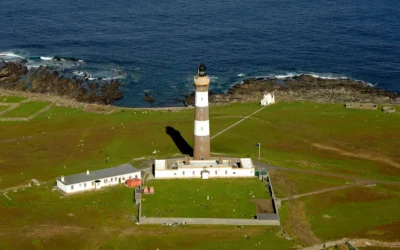
North Ronaldsay Lighthouse
North Ronaldsay Lighthouse: The UK's Tallest, Above the Island of the Seaweed Sheep Around the shoreline of North Ronaldsay — the northernmost and most isolated of the Orkney Islands — runs a drystone wall several miles long called the Sheep Dyke. Its purpose is...