
Belle Tout Lighthouse
Belle Tout Lighthouse: The Cliff-Top Beacon That Was Moved to Survive
Stand on the cliffs of Beachy Head at dusk and you understand immediately why a lighthouse was built here. The chalk falls away beneath your feet in a sheer white drop to the English Channel; the wind comes straight off the sea; and the coastline stretches west in the great rolling waves of the Seven Sisters. Belle Tout has watched over this stretch of water since 1834 — a squat, white, three-storey tower with a red lantern room, perched on the very edge of one of the most treacherous coastlines in England.
But Belle Tout’s most remarkable story is not its light. It is the fact that the entire lighthouse — every brick of it, all 850 tonnes — was lifted and moved 17 metres inland in 1999 to save it from the crumbling cliff edge, the first time in history a complete lighthouse had been relocated. Today it stands safely back from the brink, no longer a working light but a much-loved bed and breakfast and visitor attraction on the South Downs Way. This guide covers everything you need to know about visiting and staying at Belle Tout.
Where Is Belle Tout Lighthouse?
Belle Tout Lighthouse sits on the clifftop at Beachy Head, near Eastbourne in East Sussex, with the postcode BN20 0AE. It is roughly two miles west of Eastbourne town centre, set in the open chalk grassland of the South Downs.
The setting is dramatic in every direction: the rugged chalk cliffs and the English Channel to the south, the rolling hills of the South Downs to the north, and the Seven Sisters cliffs sweeping away to the west. Birling Gap, a National Trust site, is roughly a mile away and is the nearest recognisable landmark for orientation.
A Brief History of Belle Tout Lighthouse
Belle Tout was built between 1832 and 1834, first lit on 11 October 1834, to guide ships safely past the deadly chalk reefs of Beachy Head. The need was urgent and well established: the coastline had claimed countless vessels over the centuries, including the wreck of the East Indiaman Thames in 1810. The lighthouse was championed by the colourful Sussex MP and philanthropist John “Mad Jack” Fuller, whose money and influence helped bring it into being.
For nearly seventy years Belle Tout did its work — but it had a fatal flaw. On its high clifftop, the light was frequently obscured by sea mist and low cloud, hiding it from the very ships it was meant to warn. In 1902 it was decommissioned and replaced by the new Beachy Head Lighthouse, built down at the foot of the cliff where its light could be seen below the mist. Belle Tout then passed through many lives: a private home, a tea room, and a wartime lookout post during the Second World War, when it was badly damaged.
The remarkable thing about Belle Tout is what happened in 1999. Coastal erosion had eaten away the chalk until the lighthouse stood perilously close to the cliff edge — a few more years and it would have toppled into the sea. So engineers did something never attempted before with a complete lighthouse: they jacked the entire 850-tonne brick tower onto greased rails and slid it 17 metres (55 feet) back from the brink, intact. It was the first time a lighthouse had ever been relocated in its entirety, and it secured Belle Tout’s survival for generations to come.
Architecture & The Light
Belle Tout is a three-storey tower of Aberdeen granite and brick, standing approximately 26 metres (85 feet) tall from base to lantern. Its design is classic early-19th-century lighthouse architecture: a gently tapering tower, a white-painted exterior and a red lantern room and gallery at the top, making it a vivid and instantly recognisable landmark against the green of the Downs and the blue of the sea. Inside, original features survive, including the spiral staircase and portions of the keeper’s living quarters.
In its working days the light was designed so that it could be seen only from the safe channel — an ingenious feature meant that the beam was obscured if a ship strayed too close to the dangerous Head. Sadly, the same clifftop height that should have given the light its range proved its undoing, as sea mist so often rolled in below the lantern. The lighthouse no longer operates as a navigational aid; the working light passed to the new Beachy Head Lighthouse at the foot of the cliff in 1902.
Visiting the Lighthouse
Belle Tout is primarily a bed and breakfast, but it opens to day visitors for guided tours that tell the story of its history, its relocation and its role in maritime safety. The tours include access to the lantern room at the top of the tower, which rewards the climb with breathtaking panoramic views over the English Channel and along the Seven Sisters coastline. There is also a small visitor exhibition on the lighthouse’s heritage.
Climbing to the lantern room involves a steep, narrow staircase, which may not suit visitors with mobility difficulties or very young children. Day-visitor access is via a footpath from the nearby clifftop car park.
Opening times for tours vary by season and around the B&B’s guest bookings, and an admission fee applies for non-residents. As schedules change, check the official website or contact the lighthouse directly for current tour times and prices before you travel.
Check Tickets & Tour Times for Belle Tout Lighthouse →
Staying at the Lighthouse
This is what makes Belle Tout truly special: you can sleep in it. The lighthouse operates as an intimate bed and breakfast, and waking up inside a clifftop lighthouse — with the Channel filling the windows and the South Downs at the door — is an experience quite unlike an ordinary hotel stay. The rooms blend the building’s historic character with modern comfort, and several enjoy the spectacular sea views that drew sailors’ eyes for nearly two centuries.
Each room has its own character, drawn from the lighthouse’s history and architecture:
|
Room |
Sleeps |
Features |
|
The Captain’s Cabin |
2 |
Brick fireplace, sea views |
|
The Keeper’s Loft |
2 |
Round room in the former keeper’s bunkroom, mezzanine bed up a ladder |
|
New England |
2 |
Larger room, comfortable furnishings, scenic views |
|
Old England |
2 |
Larger room, comfortable furnishings, scenic views |
Because Belle Tout has only a handful of rooms and is one of the most sought-after lighthouse stays in England, it books up well in advance — reserving early is strongly advisable, especially for spring and summer weekends. Seasonal offers are sometimes available, so it is worth checking the latest deals when you book.
Find Lighthouse & Coastal Stays Near Eastbourne →
The Best Time to Visit
Spring (March to May) brings wildflowers to the chalk grassland of the Downs, nesting seabirds to the cliffs and the clearest light of the year — an excellent time for both walking and photography. Summer (June to August) offers the warmest weather, the longest days and the best chance of calm seas for spotting dolphins offshore, though it is also the busiest period and the time the B&B books up earliest.
Autumn (September to November) is quieter, with dramatic skies and a gentler light, and is a wonderful time to walk the South Downs Way without the summer crowds. Winter (December to February) is wild and atmospheric — the wind off the Channel can be ferocious — and the lighthouse takes on a romantic, storm-watched quality, though some facilities and tours may be reduced.
For the quietest experience in any season, weekday mornings are calmest. Remember that this is a highly exposed clifftop site where the weather changes fast, so always check the forecast and dress for the wind.
How to Get There
By car. Belle Tout is reached via the A259 between Eastbourne and Seaford, following the signs to Beachy Head. There is a clifftop car park nearby, from which the lighthouse is a short walk across the grassland. Enter Beachy Head or the postcode BN20 0AE into your sat-nav.
By public transport. Buses from Eastbourne run along the coast and stop near Birling Gap, from where the lighthouse is a short walk. Eastbourne is the nearest town with a railway station; from there a bus or taxi reaches the Beachy Head area. Note that this is a rural clifftop location and services are not frequent — plan ahead.
On foot. Belle Tout sits directly on the South Downs Way and is a rewarding goal for walkers. The clifftop path from Eastbourne or from Birling Gap offers spectacular coastal walking, but the terrain is exposed and undulating, and the cliff edges are dangerous — stay well back and keep to the path.
Compare Transfers & Local Transport in East Sussex →
Wildlife & The Coast
The chalk cliffs and grassland around Belle Tout are a haven for wildlife. The waters of the Channel below are home to seals, dolphins and porpoises, most often seen on calm days in spring and summer — the elevated clifftop position makes Belle Tout and Beachy Head superb vantage points for scanning the sea. The cliffs themselves host nesting seabirds, including fulmars and kittiwakes, while the rare chalk grassland of the Downs supports skylarks, butterflies and wildflowers found in few other places in Britain.
A good pair of binoculars for wildlife watching transforms a visit — bring them and give yourself time to sit and scan the water and the cliff faces. The South Downs Way and the coast path offer endless walking in both directions, from the Seven Sisters to the west to Eastbourne and beyond to the east, with the whole sweep of the Sussex coast laid out before you.
Nearby Attractions
Belle Tout sits at the heart of one of the most beautiful stretches of the Sussex coast, with several outstanding spots within easy reach.
|
Attraction |
Why Visit |
Distance |
|
Beachy Head |
Britain’s highest chalk sea cliff — dramatic views and wildlife |
Adjacent |
|
Seven Sisters |
The iconic chain of white chalk cliffs, perfect for coastal walks |
~1–2 miles |
|
Birling Gap |
National Trust site with a pebble beach, café and cliff steps |
~1 mile |
|
South Downs Way |
The 100-mile National Trail running right past the lighthouse |
On-site |
|
Eastbourne |
Seaside town with an award-winning beach, pier, shops and restaurants |
~2 miles |
A natural day out: walk a stretch of the South Downs Way and the Seven Sisters in the morning, tour Belle Tout, then drop down to Birling Gap or into Eastbourne for the afternoon.
Browse Beachy Head & Sussex Coast Tours →
Safety & Accessibility
Safety. Beachy Head’s chalk cliffs are beautiful but genuinely dangerous — the edges are unstable and can collapse without warning. Always stay well back from the cliff edge, keep to the marked paths, and supervise children closely at all times. The site is highly exposed to the weather; check the forecast and dress for strong wind and sudden changes. If you plan to walk the beach below at Birling Gap, check tide tables before setting out.
Accessibility. The lighthouse is reached by a footpath across grassland from the car park, and climbing to the lantern room involves a steep, narrow staircase that is not suitable for those with mobility difficulties or very young children. The wider clifftop and South Downs Way are uneven, open countryside. Visitors with specific access needs should contact the lighthouse before visiting.
Families. The open grassland, the wildlife and the story of the moving lighthouse make Belle Tout engaging for families, but the cliff edges demand constant supervision and the tower climb may not suit very young children.
Practical Tips
- Book your stay well ahead — Belle Tout has only a few rooms and is one of England’s most popular lighthouse B&Bs, especially in spring and summer.
- Check tour times and prices on the official website before travelling, as they vary by season and around guest bookings.
- Wear waterproof walking boots — the clifftop grassland and the South Downs Way are uneven and often muddy or wet.
- Pack a waterproof walking jacket; the clifftop is fully exposed and the wind off the Channel is relentless even on fine days.
- Bring binoculars for the dolphins, seals and seabirds — the elevated position makes for excellent sea-watching.
- Overseas visitor? The UK uses Type G plugs, so a UK travel adapter is essential for charging your devices.
- Stay well back from the cliff edges and keep to the paths at all times — the chalk is unstable.
- Check the weather forecast and, for beach walks below the cliffs, the tide tables before you set out.
Conclusion
Belle Tout is a survivor — a little white lighthouse that outlived its own light, was nearly lost to the sea, and was hauled back from the brink in one of the most extraordinary feats of engineering on the British coast. To stand in its lantern room with the Channel spread out below, or to wake in one of its rooms with the dawn coming up over the Seven Sisters, is to feel the full romance of this wild and beautiful corner of Sussex. Whether you come for an afternoon or stay the night, Belle Tout leaves a lasting impression.
Frequently Asked Questions
What is the history of Belle Tout Lighthouse?
Belle Tout was built between 1832 and 1834 and first lit in October 1834. It was decommissioned in 1902 when sea mist proved to obscure its clifftop light, and famously moved 17 metres inland in 1999 to save it from coastal erosion.
Where is Belle Tout Lighthouse located?
On the clifftop at Beachy Head, near Eastbourne, East Sussex, postcode BN20 0AE — about two miles west of Eastbourne town centre.
Can I visit Belle Tout Lighthouse?
Yes. Belle Tout offers guided tours for day visitors, including access to the lantern room, alongside its main role as a bed and breakfast.
What are the opening hours of Belle Tout Lighthouse?
Tour times vary by season and around guest bookings. Check the official website or contact the lighthouse directly for current opening hours.
How much does it cost to visit Belle Tout Lighthouse?
An admission fee applies for non-resident day visitors on guided tours. As prices vary, check the official website for current rates.
Can I climb to the top of Belle Tout Lighthouse?
Yes, guided tours include climbing to the lantern room via a steep, narrow staircase, subject to physical ability. It may not suit very young children or those with mobility difficulties.
Can I stay overnight at Belle Tout Lighthouse?
Yes. Belle Tout operates as a bed and breakfast with several themed rooms, including the Captain’s Cabin and the Keeper’s Loft. Booking well ahead is strongly recommended.
Is Belle Tout Lighthouse suitable for families?
Yes, with care. The open grassland and wildlife appeal to families, but the cliff edges require constant supervision and the tower climb may not suit very young children.
What wildlife can I see near Belle Tout Lighthouse?
Seals, dolphins and porpoises are seen offshore on calm days in spring and summer, while the cliffs host nesting seabirds and the chalk grassland supports skylarks and butterflies. Bring binoculars.
What is the best time of year to visit Belle Tout Lighthouse?
Spring and summer offer the mildest weather, clearest views and the best chance of spotting dolphins, though they are the busiest. Autumn is quieter with dramatic skies; winter is wild and atmospheric.
St John’s Point Lighthouse
St John's Point Lighthouse: The Yellow-Banded Giant of County Down In Van Morrison's song "Coney Island," the lighthouse at St John's Point is mentioned in a list of the things that make the Irish coast of County Down feel like home — somewhere between the Mourne...
Blackhead Lighthouse
Blackhead Lighthouse: The Titanic Passed Here, and You Can Stay the Night In April 1912, RMS Titanic — built at Harland and Wolff's yards on Queen's Island in Belfast, launched in 1911 and fitted out over the following months — left Belfast Lough for the last time on...
St Ann’s Head Lighthouse
St Ann's Head Lighthouse: The Last Shore-Based Light in Pembrokeshire, on the Tudor Coast In August 1485, a small fleet carrying Henry Tudor — exiled pretender to the English throne — rounded this headland and landed at Mill Bay, a sheltered cove just to the north of...
Point Lynas Lighthouse
Point Lynas Lighthouse: A Castle on the Cliffs of North Wales, Guiding Liverpool's Ships Since 1766 Most lighthouses are towers. Point Lynas is not. The lighthouse that stands on the rocky headland at the north-east corner of Anglesey is a low, castellated structure...
North Ronaldsay Lighthouse
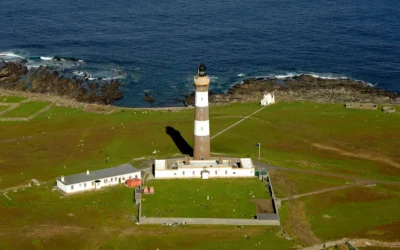
North Ronaldsay Lighthouse: The UK's Tallest, Above the Island of the Seaweed Sheep Around the shoreline of North Ronaldsay — the northernmost and most isolated of the Orkney Islands — runs a drystone wall several miles long called the Sheep Dyke. Its purpose is...